
Performance Marketing: A Practical Guide to Growing Your Business with Data-Driven Advertising.
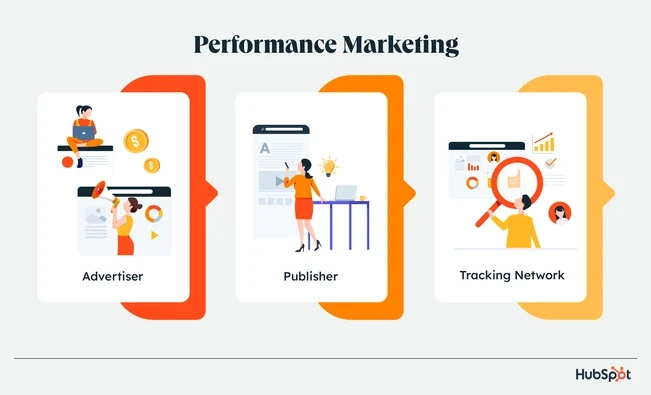
Running ads has never been easier. Almost anyone can launch a campaign on platforms like Google, Facebook, or Instagram in just a few minutes. But getting real results? That’s where performance marketing makes the difference.
When I first started learning digital marketing, I assumed successful advertising was all about creating attractive designs or writing catchy headlines. While those things matter, I quickly realised that great campaigns are built on data, strategy, and continuous improvement—not guesswork.
Performance marketing is about making every click, every impression, and every dollar spent work toward a measurable goal. Instead of hoping an ad performs well, you track its performance, analyse the results, and optimise it until it delivers better outcomes.
What Is Performance Marketing?
Performance marketing is a digital marketing approach where every campaign is measured based on specific business goals.
Rather than focusing only on visibility, performance marketing focuses on actions such as:
- Website visits
- Lead generation
- Product purchases
- App downloads
- Form submissions
- Phone calls
- Newsletter sign-ups
Every action can be tracked, measured, and improved.
This allows businesses to understand exactly what’s working and where improvements are needed. Google Ads provides businesses with tools to create measurable advertising campaigns and understand how their ads perform.
Why Performance Marketing Matters
Traditional advertising often makes it difficult to measure success. You may know how many people saw your advertisement, but you don’t always know how many became customers.
Performance marketing changes that.
It helps businesses answer questions like:
- Which campaign generated the most leads?
- Which audience converted the best?
- Which advertisement delivered the highest return?
- Where should the marketing budget be invested?
Instead of making decisions based on assumptions, businesses can make decisions backed by real data.
The Importance of Setting Clear Goals
Every successful campaign starts with a clear objective.
Without a goal, it’s impossible to know whether a campaign is performing well.
Some common campaign goals include:
- Increasing website traffic
- Generating qualified leads
- Boosting online sales
- Growing brand awareness
- Increasing app installations
- Improving customer engagement
Once the goal is defined, every part of the campaign can be optimised around achieving it.
Understanding Your Audience
One of the biggest reasons campaigns fail isn’t because of poor design—it’s because they’re shown to the wrong audience.
Before launching any campaign, take time to understand:
- Who is your ideal customer?
- What problems are they trying to solve?
- Which platforms do they use?
- What type of content grabs their attention?
The better you understand your audience, the more relevant your campaigns become.
Relevant ads naturally perform better.
Great Creatives Capture Attention
People scroll through hundreds of posts every day.
Your advertisement has only a few seconds to make someone stop scrolling.
Strong creatives usually have:
- A clear message
- Eye-catching visuals
- Simple copy
- A compelling call-to-action
The goal isn’t to impress people with complicated designs. It’s to communicate value quickly and clearly.
Sometimes, the simplest creative outperforms the most elaborate one.
Landing Pages Matter More Than You Think
Many businesses spend hours creating advertisements but only a few minutes on their landing page.
That’s a mistake.
Even the best advertisement can’t produce results if the landing page creates confusion.
A high-converting landing page should:
- Load quickly
- Explain the offer clearly
- Build trust
- Remove distractions
- Make the next step obvious
Every click should lead visitors closer to taking action.
Why Data Is Your Best Friend
One of the greatest advantages of performance marketing is that nearly everything can be measured.
Important metrics include:
- Click-through rate (CTR)
- Cost per click (CPC)
- Conversion rate
- Cost per acquisition (CPA)
- Return on ad spend (ROAS)
- Engagement rate
These numbers tell a story.
Instead of asking, “Do I think this campaign is working?”
You can confidently answer, “The data shows exactly how it’s performing.”
Testing Is Part of the Process
No marketer launches the perfect campaign on the first attempt.
Successful campaigns improve because marketers continuously test different ideas.
You can test:
- Headlines
- Images
- Videos
- Call-to-action buttons
- Landing pages
- Audience segments
Even a small change can significantly improve campaign performance.
Testing isn’t about proving one idea is right—it’s about discovering what works best.
Budget Isn’t Everything
Many people believe spending more money automatically produces better results.
That’s rarely true.
A well-optimised campaign with a modest budget often performs better than a poorly managed campaign with a much larger budget.
Smart optimisation always beats unnecessary spending.
The goal isn’t to spend more.
The goal is to get better results from every dollar invested.
Common Mistakes to Avoid
Performance marketing isn’t just about launching ads.
Some common mistakes include:
- Targeting everyone instead of a specific audience
- Ignoring campaign data
- Using weak landing pages
- Stopping campaigns too early
- Never testing new creatives
- Forgetting conversion tracking
- Focusing only on clicks instead of conversions
Avoiding these mistakes can improve campaign performance dramatically.
Performance Marketing Is Always Evolving
Digital platforms change constantly.
Algorithms evolve.
Consumer behaviour shifts.