
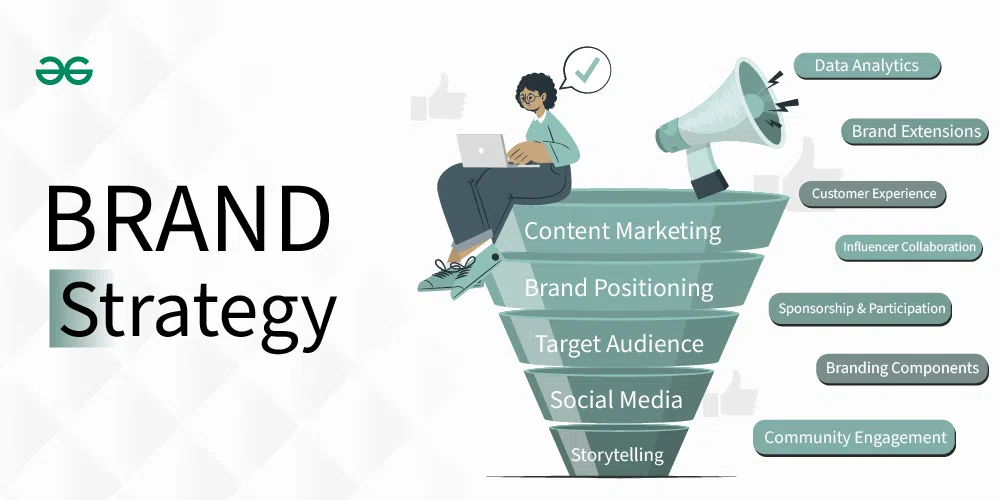
What is Brand Strategy?
Brand Strategy is a long-term plan that defines how a business presents itself to customers and how it wants to be perceived in the market. It combines purpose, values, messaging, visual identity, and customer experience to create a unique and recognizable brand.
A strong brand strategy helps businesses stand out from competitors and build lasting relationships with their audience.
Why is Brand Strategy Important?
In today’s competitive marketplace, customers don’t just buy products or services—they buy trust, experiences, and emotions.
A strong brand strategy helps businesses:
✅ Build credibility and trust
✅ Increase brand recognition
✅ Create customer loyalty
✅ Differentiate from competitors
✅ Strengthen marketing efforts
✅ Support long-term business growth
The Core Elements of Brand Strategy
1. Brand Purpose
Your brand purpose explains why your business exists beyond making profits.
Ask yourself:
- What problem do we solve?
- Why do we do what we do?
- How do we help customers?
A clear purpose creates deeper connections with your audience.
2. Brand Vision
Your vision represents where your brand wants to be in the future.
Example:
To become a trusted digital marketing partner that helps businesses achieve sustainable online growth.
A strong vision provides direction and inspiration.
3. Brand Mission
Your mission defines what your business does and how it serves customers.
Example:
Helping businesses grow through innovative digital marketing strategies and measurable results.
4. Target Audience
Understanding your audience is essential for building a successful brand.
Consider:
- Age
- Location
- Interests
- Goals
- Challenges
- Online Behavior
Knowing your audience helps create more relevant messaging.
5. Brand Positioning
Brand positioning defines how your business is different from competitors.
Ask:
- What makes us unique?
- Why should customers choose us?
- What value do we provide?
Strong positioning creates a clear identity in the market.
Brand Identity
Brand identity is the visual and verbal representation of your business.
Logo
A memorable logo helps customers instantly recognize your brand.
Colors
Colors influence emotions and brand perception.
For example:
- Green = Growth & Success
- Blue = Trust & Professionalism
- Black = Premium & Modern
Typography
Consistent fonts improve professionalism and recognition.
Visual Style
Maintain a consistent design across:
- Website
- Social Media
- Marketing Materials
- Presentations
- A consistent visual identity can help businesses create a more recognisable and professional brand experience across different channels.
Brand Messaging
Your messaging communicates who you are and what you offer.
Brand Voice
Your communication style should remain consistent.
Examples:
- Professional
- Friendly
- Creative
- Educational
- Inspirational
Value Proposition
A clear statement explaining why customers should choose your business.
Example:
Delivering data-driven digital marketing solutions that help businesses grow online.
Building Brand Awareness
Brand awareness helps people recognize and remember your business.
Strategies include:
Content Marketing
Publish valuable content that educates and informs your audience.
Social Media Marketing
Build relationships and engage with your community.
SEO
Improve visibility in search engine results.
Email Marketing
Stay connected with customers through personalized communication.
Partnerships
Collaborate with other brands and industry professionals.
Creating Brand Consistency
Consistency is one of the most important aspects of branding.
Ensure consistency across:
- Logo Usage
- Colors
- Fonts
- Messaging
- Content Style
- Customer Experience
Consistent branding builds trust and professionalism.
Benefits of a Strong Brand Strategy
Increased Recognition
Customers can easily identify your brand.
Higher Trust
Consistent branding creates credibility.
Customer Loyalty
Strong brands build emotional connections.
Better Marketing Results
A clear brand message improves campaign performance.
Competitive Advantage
A unique brand stands out in crowded markets.
Common Branding Mistakes
❌ Inconsistent visual identity
❌ Unclear messaging
❌ Ignoring customer feedback
❌ Trying to appeal to everyone
❌ Lack of brand personality
❌ Inconsistent content creation
Avoiding these mistakes helps maintain a strong brand image.
Brand Strategy Development Process
Step 1: Market Research
Analyze competitors and industry trends.
Step 2: Define Brand Purpose
Establish your mission, vision, and values.
Step 3: Identify Target Audience
Understand customer needs and preferences.
Step 4: Create Brand Identity
Develop logos, colors, typography, and visual guidelines.
Step 5: Develop Messaging
Create a clear and consistent communication strategy.
Step 6: Implement & Grow
Apply branding across all marketing channels and continuously refine it.
Measuring Brand Success
Important metrics include:
- Brand Awareness
- Website Traffic
- Social Media Engagement
- Customer Retention
- Brand Mentions
- Customer Satisfaction
- Lead Generation
Regular monitoring helps strengthen your brand over time.
Conclusion
A strong brand strategy is the foundation of long-term business success. It helps businesses communicate their value, build trust, and create meaningful relationships with customers.
By combining a clear purpose, consistent identity, and effective messaging, brands can stand out in competitive markets and achieve sustainable growth.
Ready to Build a Powerful Brand?
Let’s create a brand strategy that reflects your vision, connects with your audience, and drives long-term business success. 🚀